Digital pet health record: why go beyond the paper booklet?
A paper booklet gets lost, stays at home and never reminds you of anything. What a digital pet health record changes, and which paper documents to keep.
Updated on November 18, 2026 · 4 min read
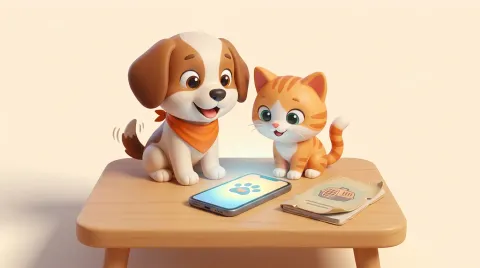
The paper health booklet has done its job for generations, and it still has a role. But between the booklet in a drawer, the invoices in a folder, the test results in an email and the photos on someone's phone, your pet's health history usually ends up scattered everywhere. A digital record brings it all together in your pocket: here is what it changes, and what it does not replace.
The limits of paper
- It is never where you need it. At the emergency clinic on a Sunday night, on holiday or at the kennel's front desk, the booklet is at home.
- It can be lost or damaged, and nothing brings back years of handwritten history.
- Only one person has it. The rest of the family has no idea when the last deworming tablet was given.
- It never reminds you of anything. The date of the next booster is written inside, in a closed booklet, in a drawer.
- It has no room for a weight curve, test results, photos of a wound or the notes from each visit.
What a digital record changes
The information follows you. When a vet who does not know your pet asks when the last vaccine was, which treatment they are on and how much they weigh, you can answer in a few seconds instead of guessing.
Reminders replace memory. Boosters every one to three years, parasite treatments every month or every few months: these are exactly the things human memory handles badly. A reminder set once does the job.
Everything is in one place. Vaccines, treatments, weight, vet visits, prescriptions, test results and photos sit side by side, in chronological order.
The whole family sees the same thing. Whoever takes the pet to the vet, gives the tablet or notices a problem can record it for everyone.
It can be handed over. A complete export gives a pet sitter, a boarding kennel or a new vet the essentials in a single file.
What a good record should contain
Whichever tool you choose, this is the information worth keeping:
- identity: date of birth, breed, sex, neutered or not, microchip number, passport number;
- allergies, chronic illnesses and long-term treatments;
- each vaccine, with the date of the next booster;
- each parasite treatment, with the product name and the date;
- weight, measured regularly;
- vet visits: the reason, the diagnosis, what was decided;
- documents: prescriptions, test results, certificates, insurance.
When comparing apps, check three practical points: can you set reminders, can you share the record with someone else, and can you export your data, so that it never stays locked in?
The paper you still need to keep
A digital record is a memory aid and a backup. It does not replace official documents:
- the European pet passport, completed and signed by a vet, is required to travel between EU countries with a dog, a cat or a ferret;
- the vaccination booklet or certificates, signed by the vet, are the proof of vaccination that kennels, clubs and authorities may ask to see;
- the identification document linked to the microchip shows that the animal is registered in your name;
- an original prescription may be needed to obtain a medicine.
Keep these originals together in a safe place, take them with you when you travel, and store a photo of each one in the digital record. If one goes missing, having a copy and the numbers will make replacing it much easier.
How to switch in one evening
- Gather the booklet, the passport and the latest invoices and prescriptions.
- Create your pet's profile, with their identity and microchip number.
- Enter the most recent vaccines with the date of the next booster. There is no need to copy out ten years of history: start with what is still valid, and photograph the older pages.
- Add the current treatments, with a reminder for each.
- Photograph the important documents.
- Note today's weight.
- Invite the people who share the care of your pet.
Then keep one habit: update the record the same day, in the waiting room or as soon as you get home. A record is only useful if it is up to date.
What Medika offers
Medika is a digital health record for 31 species, from dogs and cats to rabbits, horses, birds and reptiles. It records vaccines and treatments with reminders, tracks weight on a chart, stores documents and photos, can be shared with co-owners and exports the full record as a PDF. It is available on iPhone and Android and is free to download, with Medika Premium to remove the limits. It does not replace the passport or the vaccination booklet: it keeps everything else within reach.
This article is for information only and does not replace the advice of a veterinarian. If you have any doubt about your pet's health, consult a professional.