What should a rabbit eat? Hay, greens and the carrot myth
Unlimited hay, leafy greens every day, a few pellets and carrots only as a treat: how to feed your rabbit well, and why a rabbit off its food is an emergency.
Updated on November 18, 2026 · 4 min read
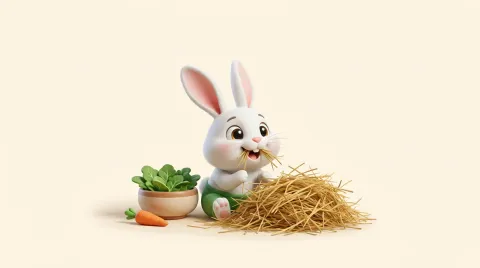
In cartoons, rabbits live on carrots. In real life, a rabbit fed that way would quickly become ill. Most of the common health problems in pet rabbits (overgrown teeth, digestive trouble, obesity) start in the food bowl. And one thing to know straight away: a rabbit that stops eating is an emergency, not a rabbit being fussy.
Hay: the heart of the diet
Hay or fresh grass should make up at least 80% of what your rabbit eats. In practice, this means unlimited hay, renewed every day: a pile at least as big as the rabbit itself.
Why so much?
- For the gut: long fibres keep the digestive system moving. Without them, it slows down, then stops.
- For the teeth: they grow continuously, and only hours of chewing wear them down properly.
Good hay is greenish, smells pleasant and is neither dusty nor mouldy. Grass hays such as meadow hay or timothy suit adults. Alfalfa (lucerne) is richer in protein and calcium: it is fine for growing youngsters, but too rich to be an adult's everyday hay.
Fresh grass is excellent too, introduced gradually. Never give lawnmower clippings: they ferment very quickly and can cause serious digestive upsets.
Fresh greens every day
Offer a good handful of leafy greens a day, ideally a mix of several plants:
- herbs: parsley, coriander, basil, mint, dill;
- leaves: dandelion, carrot tops, celery leaves, chicory, rocket;
- cabbage-family leaves, in small amounts.
Wash them, and introduce each new plant one at a time and in small quantities so the gut flora can adapt. If the droppings become soft, stop the new food.
To avoid: iceberg lettuce, which has little nutritional value, and above all the onion family, rhubarb, avocado and potato plants, which are toxic to rabbits.
Pellets: a small portion, and no muesli
Pellets are a supplement, not the meal. An adult needs only a small measured portion a day: think spoonfuls rather than a full bowl. Your vet can tell you the right amount for your rabbit's weight; growing or nursing rabbits need more.
Choose plain pellets that all look the same, rather than muesli-style mixes with coloured flakes and seeds. With a mix, the rabbit picks out the sweet, starchy pieces and leaves the fibre. This selective feeding promotes dental disease, obesity and digestive problems. If you are switching from a mix to pellets, do it gradually over two to four weeks.
The carrot myth, and other treats
Wild rabbits do not dig up root vegetables. Carrots and fruit are full of sugar: for a rabbit, they are sweets. A thin slice of carrot or a small piece of apple (without pips) from time to time is plenty.
Avoid completely: bread, biscuits, cereals, seed sticks held together with honey, yoghurt drops, chocolate and any human snack. A rabbit's gut is not made for starch or sugar.
The best treat is often a fresh herb offered by hand, or simply a different kind of hay.
Water, and droppings worth knowing about
Fresh water must be available at all times and changed every day. A heavy ceramic bowl allows a more natural drinking position than a bottle, and rabbits generally drink more from it.
Rabbits produce two kinds of droppings: the dry round ones you see, and soft, shiny ones called caecotrophs, which they eat directly as they are produced. This is normal and essential: it is how they absorb certain vitamins and nutrients. If you regularly find these soft droppings uneaten or stuck to the fur, the diet is probably too rich, or the rabbit is overweight or in pain: talk to your vet.
When a rabbit stops eating: an emergency
A rabbit's gut has to work without interruption. When it slows down (this is called gut stasis), the situation can become life-threatening in a short time. The warning signs:
- food left untouched, even favourite treats;
- droppings that are smaller, fewer or absent;
- a hunched posture, a swollen belly, loud teeth grinding;
- a rabbit that hides and no longer moves.
A rabbit that has eaten nothing or passed no droppings for 12 hours needs a vet urgently, and you should not wait that long if they seem in pain or bloated. Stasis is often the consequence of something else (dental pain, stress, an unsuitable diet), which the vet will look for. Do not give any medicine on your own initiative.
Keeping an eye on diet and weight
A rabbit's weight says a lot about their diet: a slow rise often means too many pellets or treats, a drop can point to a dental problem. With Medika, you log the weight regularly and see the trend on a chart. You can also use the notes to record a change of hay or pellets and its date: useful information on the day your vet asks since when things have changed.
This article is for information only and does not replace the advice of a veterinarian. If you have any doubt about your pet's health, consult a professional.