Guinea pig health: vitamin C, diet and weekly checks
Guinea pigs cannot make their own vitamin C. What to feed them every day, why a weekly weigh-in matters and which signs mean a prompt visit to the vet.
Updated on November 18, 2026 · 4 min read
Guinea pigs are talkative, gentle and sturdier than they look, provided two things are right: their diet and your attention. Like all prey animals they hide illness, so small routines make a big difference. First rule: a guinea pig that stops eating needs a vet the same day.
Why vitamin C matters so much
Like humans, and unlike most other animals, guinea pigs cannot make their own vitamin C, and they barely store it. They need some every single day in their food.
A deficiency can show within a couple of weeks. It causes scurvy:
- reluctance to move, painful or swollen joints;
- a rough coat, poor appetite, weight loss;
- sore or bleeding gums, wounds that heal slowly;
- more frequent infections.
Needs are higher in young, pregnant, nursing or sick animals. If you recognise these signs, see your vet: they will confirm the cause and prescribe a suitable supplement.
Where the vitamin C comes from
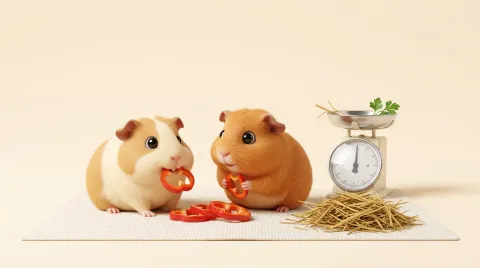
- Fresh vegetables every day. Bell pepper (any colour) is the classic: very rich in vitamin C and usually well liked. Add leafy greens and herbs such as parsley, coriander or kale, in rotation.
- Pellets made for guinea pigs, which are enriched with vitamin C. Rabbit pellets are not. The vitamin breaks down with time, heat and light: buy small bags, store them somewhere cool and dry, and respect the use-by date.
- Not the water bottle. Vitamin C added to drinking water degrades quickly and can change the taste, so that some guinea pigs drink less. If a supplement is needed, your vet will tell you which form and how much.
Fruit also contains vitamin C but is high in sugar: keep it as an occasional treat.
Hay first, as for rabbits
Unlimited hay remains the basis of the diet, around 80% of what a guinea pig eats. It keeps the gut moving and wears down the teeth, which grow throughout life. Then come a measured portion of pellets, the daily vegetables and fresh water at all times.
Avoid muesli-style mixes (they pick out the sweet pieces), seeds and nuts, dairy products, potato, onion, rhubarb and avocado. Introduce any new food gradually.
Never a guinea pig on their own
Guinea pigs are herd animals: one living alone is deprived of something essential, however much time you give it. Pairs that work well are two females, two males who get on, or a neutered male with one or more females.
A rabbit is not a suitable companion: it can injure a guinea pig, has different dietary needs and can carry bacteria that cause respiratory disease in guinea pigs.
Give them a large enclosure on one level, a shelter for each animal, and protection from heat, which they tolerate badly.
The weekly weigh-in
It is the simplest and most useful health check. A guinea pig can lose a lot of weight under its coat before anything shows, and weight loss is often the very first sign of illness.
- Weigh each guinea pig once a week, at the same time of day, on kitchen scales with a bowl.
- Write the weight down: it is the trend that counts.
- A few grams up or down mean nothing. A weight that falls two weeks in a row, or a clear drop of several tens of grams, deserves a call to the vet, even if the animal seems fine.
- A young guinea pig should gain weight steadily.
If you are worried, weigh daily until you have spoken to the vet.
Teeth, nails and the rest of the check
While your guinea pig is on your lap, look at:
- the teeth: the front teeth should be even and not too long. Dribbling, dropping food or eating slowly suggest a problem with the back teeth, which only a vet can examine;
- the nails: trim them about once a month, or ask your vet to show you how;
- the coat and skin: bald patches, dandruff or intense scratching often mean mites or a fungal infection, which can be passed on to humans;
- the eyes and nose: clean and dry. Sneezing, discharge or noisy breathing can signal a respiratory infection, which is serious in guinea pigs;
- the feet: the soles should not be red or swollen;
- the bottom and the droppings: clean, with firm, oval droppings.
Call the vet without delay for a guinea pig that is not eating, breathes with difficulty, has diarrhoea, a swollen belly or blood in the urine. And never give a medicine intended for another animal: some are dangerous for guinea pigs.
A record for each guinea pig
With several guinea pigs, weights are quickly mixed up. In Medika, each animal has its own record: you log the weekly weight, and the chart shows at a glance whether the curve is flat, rising or falling. You can note what you saw during the check, record vet visits and share the record with the rest of the family, so everyone knows who was weighed and when.
This article is for information only and does not replace the advice of a veterinarian. If you have any doubt about your pet's health, consult a professional.