Caring for a senior dog: what changes with age
From what age is a dog senior, and what changes? Weight, joints, teeth, lumps, exercise and check-ups: how to keep your ageing dog comfortable.
Updated on November 18, 2026 · 4 min read
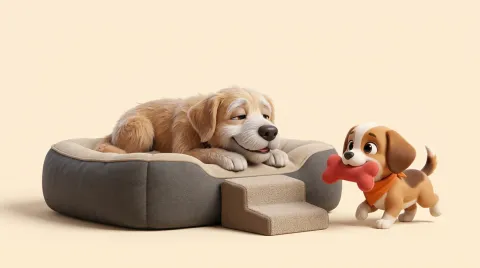
Your dog's muzzle is turning grey, they sleep a little more and think twice before jumping into the car: the years are starting to show. Old age is not a disease, but it does change what your dog needs. Here is what to expect, and how to keep them comfortable for as long as possible.
At what age is a dog senior?
There is no single birthday. It depends mostly on size: small dogs live longer and age later, giant breeds age much earlier. Vets often consider that the senior stage covers roughly the last quarter of a dog's expected lifespan.
| Size of dog | Often considered senior from |
|---|---|
| Small (under 10 kg) | Around 10 to 12 years |
| Medium (10 to 25 kg) | Around 8 to 10 years |
| Large (25 to 45 kg) | Around 7 to 8 years |
| Giant (over 45 kg) | Around 5 to 7 years |
These are only rough guides: breed, weight and health history matter as much as age. Your vet can tell you when to start treating your dog as a senior.
Old age or illness? The signs that should not wait
Many changes are put down to "just getting old" when they are in fact the signs of a problem that can be treated.
Call a vet immediately if your dog has difficulty breathing, collapses or faints, has a seizure, suddenly cannot stand or use their back legs, has very pale gums, or has a swollen, tight belly while trying to vomit without bringing anything up.
Book an appointment within a few days if you notice:
- drinking or urinating clearly more than usual;
- weight loss or a dropping appetite;
- a cough that lasts, or getting out of breath quickly;
- a new lump, or one that is growing;
- accidents in the house, confusion or restlessness at night.
A check-up twice a year
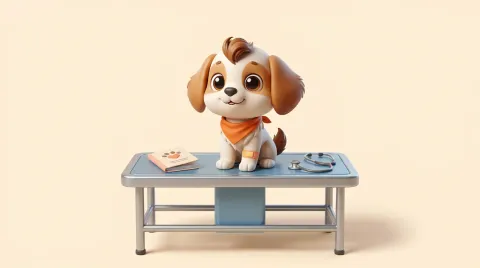
A dog ages much faster than we do, so a lot can change in six months. That is why most vets recommend examining a senior dog every 6 months rather than once a year.
Blood and urine tests, done once or twice a year, can reveal a kidney, liver or hormonal problem well before the first visible symptom, at a stage when much more can be done about it.
Weight and food
Weight is one of the most useful things to watch:
- Extra kilos put strain on the joints, the heart and the breathing. Since an older dog moves less, the same bowl as before often means slow weight gain.
- Unexplained weight loss, or muscles melting away along the back and thighs, is always a reason to see the vet.
There is no single "senior food" that suits every dog. Some need fewer calories, others need more good-quality protein to keep their muscles, and some illnesses call for a specific diet. Ask your vet what fits your dog, and always make the change gradually, over several days.
What you can check at home
Once a month, take five minutes to look your dog over:
- Joints: stiffness when getting up, lagging behind on walks, hesitating at the stairs or the car boot are typical signs of arthritis. It is painful, but it can be relieved. Never give a human painkiller: several are toxic to dogs.
- Teeth: bad breath, tartar, red gums, kibble dropped from the mouth or chewing on one side point to dental disease, which is painful and very common in older dogs.
- Lumps: run your hands over the whole body. Many lumps in older dogs are harmless fatty lumps, but nobody can tell by touch alone. Show your vet any new lump, and any lump that grows, changes or bleeds. Note where it is and how big, with the date.
- Senses and behaviour: sight and hearing often fade. A dog who seems lost in a familiar place, stares at walls, paces at night or forgets their house training may be showing signs of cognitive decline. Mention it to your vet: there are ways to help.
Exercise and a more comfortable home
An old dog still needs to move: activity keeps their muscles, joints and spirits up.
- Prefer several short walks to one long outing, on soft ground when possible, and let them sniff as much as they like.
- Avoid the hottest hours in summer: an older dog copes less well with heat, and with cold too.
- Keep their mind busy with scent games and easy exercises.
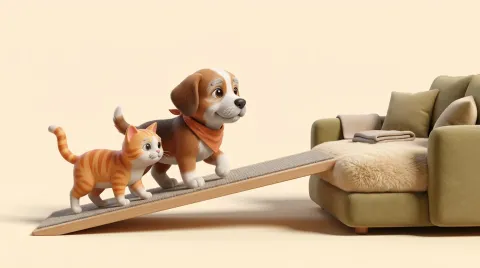
At home, a few adjustments make a real difference: non-slip rugs on slippery floors, a thick bed away from draughts, a ramp or a step for the car and the sofa, nails kept short for a better grip, and more frequent trips outside, since an older bladder is less patient. If their sight is fading, avoid moving the furniture around.
Following your dog through the years
With a senior dog, what matters is the trend: a weight that creeps down, a lump that changes, a stiffness that settles in. In Medika, you log each weigh-in and see the curve, you keep a note of every vet visit, and you store test results and photos to compare over time. Reminders take care of vaccines and treatments, and the record can be shared with the rest of the family so that everyone follows the same information.
This article is for information only and does not replace the advice of a veterinarian. If you have any doubt about your pet's health, consult a professional.