Caring for a senior cat: the signs to watch closely
Weight loss, drinking more, jumping less: in older cats, small changes can hide kidney disease, hyperthyroidism, diabetes or arthritis. What to watch.
Updated on November 18, 2026 · 4 min read
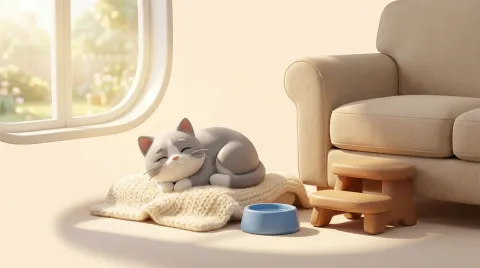
Cats are experts at hiding illness, and older cats even more so. From around 11 years of age, the diseases of ageing become common, and they often begin with changes so small that they are easily put down to "just getting old". Here are the signs worth watching closely.
At what age is a cat senior?
Vets generally speak of a mature cat from 7 years and of a senior cat once they are over 10. These are only labels: plenty of cats now live to 15 and well beyond, and many stay playful into old age. What changes is the risk of illness, which rises steadily, and with it the value of keeping a closer eye on them.
The signs that are an emergency
Some situations cannot wait for an appointment. Call a vet immediately if your cat:
- breathes with their mouth open, or with visible effort;
- goes to the litter tray again and again without passing urine, especially a male;
- suddenly cannot use their back legs, often crying out in pain;
- suddenly seems blind, with wide pupils, bumping into furniture;
- collapses or has a seizure.
A cat who stops eating for more than a day should also be seen quickly: in cats, going without food can itself cause serious illness.
Four common diseases in older cats
- Chronic kidney disease. Very common with age. The first signs are discreet: drinking more, larger clumps in the litter, gradual weight loss, a fussier appetite. It cannot be cured, but when it is caught early, diet and treatment can often slow it down.
- Hyperthyroidism. An overactive thyroid gland, typical of cats over 10. The classic picture is a cat who loses weight while eating well, or even ravenously, and who becomes restless or noisy, sometimes with vomiting. It responds well to treatment.
- Diabetes. The cat drinks and urinates a lot, and loses weight despite a good appetite. Overweight cats are more at risk.
- High blood pressure. It causes no visible sign until it damages the eyes, brain, heart or kidneys, and it often goes with kidney disease or hyperthyroidism. The only way to detect it is to measure it.
As you can see, the signs overlap. Weight loss and increased thirst are never "normal ageing": only an examination, with blood and urine tests, can tell these diseases apart.
Arthritis, the pain that goes unnoticed
Arthritis is very common in older cats, yet it is often missed, because a cat in pain rarely limps. Look for changes in habits instead:
- hesitating before a jump, or giving up high perches;
- taking the stairs slowly, one step at a time;
- grooming less, with a matted or scruffy coat on the back and hindquarters;
- claws that grow too long because they are used less;
- doing their business next to the litter tray, when its sides have become too high;
- sleeping more, or grumbling when stroked or brushed.
Your vet can relieve this pain. Never give a human painkiller: paracetamol, in particular, can kill a cat. At home, a litter tray with a low entrance, a step up to the favourite spot, a warm bed and bowls that are easy to reach all help.
Three things to monitor at home
- Weight. It is the best early warning, and fur hides it well. Weigh your cat about once a month, on baby scales or by weighing yourself with and without them in your arms. A few hundred grams lost is a lot for a 4 kg cat.
- Water. Notice how often you refill the bowl, and whether your cat starts drinking in new places, such as the tap or the shower.
- The litter tray. Larger or more frequent clumps, or accidents outside the tray, are worth mentioning to the vet.
Also listen out for a cat who starts yowling at night: pain, high blood pressure, hyperthyroidism or cognitive decline can all be behind it.
A check-up twice a year
Because things change quickly at this age, most vets recommend seeing a senior cat every 6 months. The visit usually includes a weigh-in, a full examination and, depending on the cat, blood and urine tests and a blood pressure measurement.
To make the trip less stressful, leave the carrier out at home for a few days beforehand, open, with a familiar blanket inside, so that it becomes an ordinary piece of furniture.
Catching slow changes with Medika
Slow changes are the hardest to notice when you see your cat every day. In Medika, each weigh-in is added to a chart, so a gradual loss stands out, and free notes let you jot down what you observe: thirst, appetite, jumps, nights. You can also keep the results of each test and the notes from each vet visit, ready to compare at the next check-up.
This article is for information only and does not replace the advice of a veterinarian. If you have any doubt about your pet's health, consult a professional.