Heatstroke in dogs: signs, first aid and prevention
Heavy panting, drooling, collapse: how to recognise heatstroke in your dog, cool them the right way before the vet, and avoid it altogether.
Updated on November 18, 2026 · 3 min read
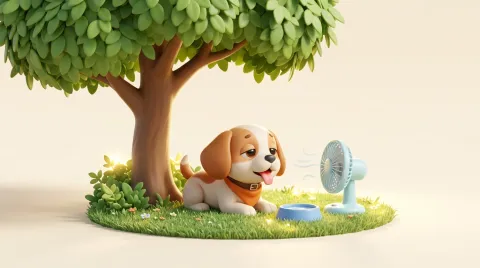
Dogs handle heat far less well than we do: they barely sweat and cool themselves mainly by panting. When that is no longer enough, their body temperature climbs to dangerous levels. Heatstroke is a life-threatening emergency: if you suspect it, start cooling your dog straight away and call a vet.
Why it happens so quickly
Panting cools by evaporation, so it loses much of its effect when the air is hot or humid. In a closed space, in the sun or during exercise, heat builds up faster than the dog can get rid of it, and the organs start to suffer.
It does not take a heatwave. Many cases happen on an ordinary warm day, after a walk, a run or a game of fetch, and the first warm days of the year are risky because dogs have not yet had time to adapt.
The signs to recognise
Early signs:
- heavy, noisy panting that does not settle with rest;
- a lot of drooling, thick saliva;
- bright red gums and tongue;
- restlessness, searching for shade, slowing down or refusing to walk.
Signs that the situation is serious:
- staggering, weakness, confusion;
- vomiting or diarrhoea;
- gums turning pale or bluish;
- collapse, seizures, loss of consciousness.
Do not wait for the second list. A dog who is panting hard and looks unwell in the heat needs cooling now.
First aid: cool first, then go to the vet
Current veterinary advice is to start cooling on the spot, before transporting the dog: every minute spent at a high temperature counts.
- Stop all activity and move your dog into the shade or a cool, airy room.
- Pour water over their whole body. Cold tap water is fine, and any water cooler than the dog helps. A young, healthy, fully conscious dog can be stood in a paddling pool, a bath or a stream, with their head well above the water. For an older, ill, flat-faced or drowsy dog, keep pouring water over the body and keep it away from the nose and mouth.
- Add moving air: a fan, a breeze, the car's air conditioning. A wet coat plus airflow is what cools.
- Offer small amounts of water to drink if they want it. Never force them.
- Call the vet while you are cooling, then set off once cooling is well under way, with the air conditioning on or the windows open.
What to avoid:
- do not cover your dog with wet towels: they trap the heat. Lying on a wet towel is fine;
- do not lose time looking for lukewarm water: the old advice to cool 'slowly' is outdated;
- do not give any medicine.
Even if your dog seems to have recovered, see the vet the same day: damage to the kidneys, the gut, blood clotting or the brain can show up hours later.
Dogs most at risk
Any dog can suffer heatstroke, but some much more easily:
- flat-faced breeds (bulldogs, pugs and similar), whose airways make panting inefficient;
- overweight dogs;
- elderly dogs and puppies;
- dogs with a thick, dense coat, and large breeds;
- dogs with heart or breathing problems;
- very keen dogs who never stop of their own accord.
Prevention: a few firm rules
- Never leave a dog in a parked car, not for five minutes, not in the shade, not with the windows ajar. The temperature inside rises within minutes, even on a mild day. The same goes for conservatories and caravans.
- Walk early in the morning or late in the evening when it is warm, and skip running, cycling and ball games.
- Test the pavement with the back of your hand: if you cannot keep it there for a few seconds, it will burn their pads.
- Provide shade and fresh water at all times, at home and on outings.
- For flat-faced, elderly or overweight dogs, a short toilet outing is enough in hot weather.
How Medika helps you through the summer
Excess weight is one of the risk factors you can act on: Medika's weight tracking and its chart show you whether your dog is drifting upwards before the summer arrives. After a heat episode, you can note in the vet visit what was said and what needs watching. And if someone else looks after your dog during the holidays, the PDF export of the record gives them the health information they need.
This article is for information only and does not replace the advice of a veterinarian. If you have any doubt about your pet's health, consult a professional.