EU pet passport: what it is and how to get one for your pet
What the EU pet passport contains, who can issue it, how long it stays valid and what to check before travelling with your dog, cat or ferret.
Updated on November 18, 2026 · 4 min read
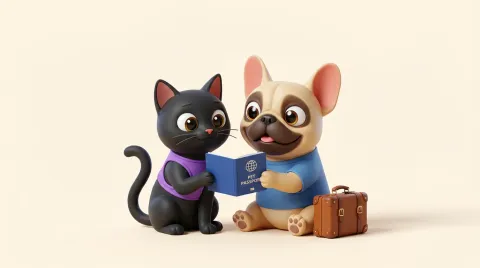
If you plan to cross a border with your dog, cat or ferret inside the European Union, there is one document you cannot do without: the EU pet passport. It is easy to obtain, provided the steps are done in the right order, and it only stays valid if one date is never missed.
What the pet passport is for
The EU pet passport is the official identification document that allows a dog, a cat or a ferret to travel between EU countries with its owner. It has the same layout everywhere in the Union and carries a unique number. Its role is to prove two things: that the animal is identified, and that it is vaccinated against rabies.
It exists only for dogs, cats and ferrets. For rabbits, rodents, birds or reptiles, there is no European passport: the national rules of the destination country apply, so check them before travelling.
What it contains
Inside the booklet, you will find:
- the owner's name and contact details;
- a description of the animal: name, species, breed, sex, date of birth, colour;
- the microchip number, with the date it was implanted or read and its location on the body;
- the rabies vaccination: date of the injection, date from which it is valid, date until which it is valid;
- sections for the tapeworm treatment required by a few countries, for other vaccines and for health checks;
- the details and signature of the vet who issued it.
Only a vet may fill in the health sections. Never add or correct anything there yourself: an altered entry can make the passport invalid.
How to get one
Passports are issued by authorised vets, to owners who live in the EU. Many everyday practices are authorised: ask when you book. The steps always come in this order:
- Microchip. The vet implants a chip, or reads the one already there. It must be in place before the rabies vaccination, or on the same day at the latest.
- Rabies vaccination. It can be given from 12 weeks of age.
- Passport. The vet fills it in, signs it and hands it to you.
All of this can often be done in a single visit. Bring any vaccination booklet your pet already has. The price varies from one country and one practice to another, so ask beforehand.
How long it stays valid
The passport is valid for the animal's whole life, as long as the rabies vaccination recorded in it is in date. Two rules matter:
- after a first rabies vaccination, you must wait 21 days before travelling;
- each booster must be given before the "valid until" date of the previous one, which means every 1 to 3 years depending on the vaccine and the country. If the date passes, the next injection counts as a first vaccination and the 21-day wait applies again.
The passport's layout was updated in 2026. Passports issued before that remain valid, so there is no need to replace yours.
What the passport does not do
A few points are often misunderstood:
- It is not a registration. Your contact details must also be up to date in your country's pet identification database, which is what gets consulted when a lost animal is found.
- It does not cover every requirement. Some destinations ask for more, such as a tapeworm treatment for dogs entering Finland, Ireland, Malta, Norway or Northern Ireland.
- It is not a full health record. Weight, treatments, test results and the vet's remarks have no place in it.
- It is issued in the EU. A few neighbouring countries, such as Switzerland and Norway, issue equivalent passports. Pets arriving from elsewhere travel with an animal health certificate drawn up by an official vet shortly before departure, and so do the pets of owners who live in Great Britain.
Good habits
- Check the rabies "valid until" date before booking a trip.
- Keep the passport with you during the journey, not in a suitcase in the hold.
- Take photos of the identification and vaccination pages. If the passport is lost, your vet can issue a new one, and having the numbers at hand saves time.
- Rules change, and each country can add its own: confirm them on the official website of your destination a few weeks before leaving.
The essentials of the passport in Medika
In Medika, each animal's profile includes the passport number and the microchip number, so you have them even when the booklet has stayed at home. Record the rabies vaccine with the date of its next booster and you get a reminder before it expires, which is precisely the date the passport's validity depends on. You can also store photos of its pages with your other documents. The app does not replace the passport: the official booklet still has to travel with your pet.
This article is for information only and does not replace the advice of a veterinarian. If you have any doubt about your pet's health, consult a professional.